The other day I went foraging in my own backyard. I was surprised at how many edible things I found. In the food garden, we currently have cucumbers, tomatoes, cilantro, rhubarb, strawberries, marigolds, and garlic scapes growing.
In the flower garden we have pansies and roses.
In the wild we have dandelions, pineapple weed, pinecones, spuce tips, thyme flowers, and clovers.
Close to the house but not actually in the yard there is also wild carrot and purple clovers.
Top: dandelion greens (left), pineapple weed (right).
Middle: pinecones (left), pansies, green tomato, dandelion flowers (right).
Bottom: cucumber (left), garlic scapes, spruce tips (top), rose petals (bottom), thyme flowers (top), cilantro (bottom), clovers (right).
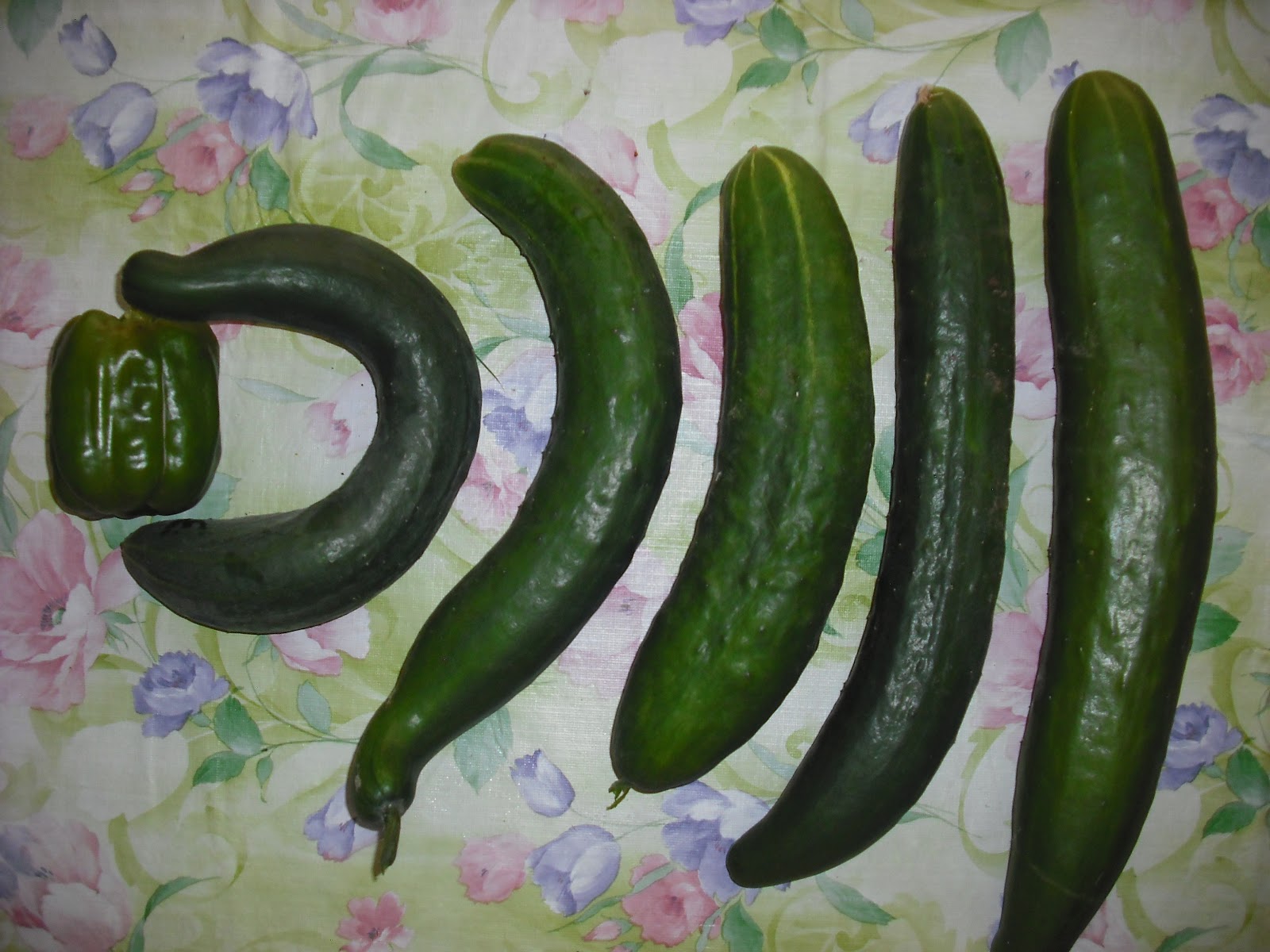
It is hard to believe, but the last cucumbers were just picked from our garden last week. We have had a few frosty nights, but these cucumbers were able to survive. Any beans, tomatoes, and other vegetables we had are long gone, but the cucumbers, who grew the best all summer long, still held on. In fact, we had an overabundance of cucumbers throughout the summer. We recently picked three more good sized ones, and I am pretty sure that is it for this year. They still taste pretty good too. They aren't quite as sweet as cucumbers from midsummer, but they are crisp and fresh nonetheless. They also last pretty well in the cooler weather and do not get soggy as fast. It is pretty good that we have had cucumbers from July all the way through to November. Some people tend to plant their gardens earlier and reap harvests earlier, but our plants never seem to do as well that early. That is, if we actually manage to plant them early. This way though, we still get vegetables later in the season. I think it is wonderful, however I am a little disappointed that this is the end now. I'll have to wait until next year to enjoy some fresh cucumber unless I want to try some imported. Here is a picture of some of our cucumbers (and a green pepper) at the peak of the season.

Yesterday I took a walk out to our tiny vegetable garden along the side of the house. I noticed, as usual, the cucumbers seem to have taken over the tiny patch. Sure, they left enough room for a few decent tomato plants, and a little bit of room for some peas, beans, green peppers, and lettuce, but the majority is cucumbers. That isn't a terrible thing, since I really do like cucumbers and I eat quite a bit of it. But there is only so much cucumber one can eat. Cucumber is best eaten fresh and raw from the garden, just after a quick rinse. Peeling isn't necessary and slicing is even optional. But once you eat some raw cucumber with your meal, or even as a sack, and add some to your salad and some to your sandwich, what more can you do with it? Cucumber isn't really a vegetable you can add to many cooked dishes, it doesn't work well in baked goods like zucchini does, and its high water content means it doesn't withstand freezing very well. The only other option is to pickle and preserve it I guess. Since we don't have the proper equipment for that, and aren't really big fans of pickles, and preserves, and that kind of thing, we will share our cucumbers with those who do. This is what I harvested yesterday. Some of these cucumbers were left to grow way too big. We will keep the small ones for eating as is, because they will have much better a flavor than the big ones. I also found a few tomatoes while I was at it, a few regular and a few cherry, which are so fun to eat just to rinse and pop in your mouth. Happy harvesting to all!

Spring weather is starting to appear, and before we know it, it will be time to start our vegetable gardens outdoors. For now though, while there is still frost and the ground is too frozen to dig up, vegetable gardens can be started indoors. By beginning planting now, your vegetable plants will already have a great head start and produce vegetables sooner after they have been transplanted outdoors. You can begin your indoor planting in small pots or wooden boxes, but containers work very well too. Water, pop, and juice bottles that have been cleaned and cut open actually work very well for beginning plants. Empty yogurt, butter, cottage cheese, and other similar containers also work well, as do jars and even tin cans. When I was young, I planted a few bean seeds in a pile of dirt in a clean two-liter pop bottle with the top cut off, and a small door cut into the back. I couldn't believe how quickly the plant grew, and how large it got. It quickly outgrew that pop bottle, and its stalks were spilling out the small door and out of the top. It was an easy plant to care for as well, it could easily be placed in sunlight, and was easy to water. It was also easily transportable. I think I even took it on a trip to my grandparent's house a few hours car ride away, and it still survived well.
Indoor plants that are started with seeds will need a nice amount of soft dirt, lots of light, from sunlight or lamps, and water. They will also require some temperature control, room temperature is fine, but ensure that it is not too warm or too cold or drafty. Dedicate a spot in your house where the plants won't be disturbed by temperature changes, won't be accidentally knocked over, and can access light and water easily.
Herbs are always good plants to have indoors. Aside from those, here is a list of plants that are commonly started indoors before the springtime, and they benefit from this quite a bit.
- Cucumbers, Peppers, Tomatoes, Lettuces, Carrots, Broccoli, Eggplant, Celery
These vegetable are suggested as starting indoors either because they require longer growing periods, grow better when transplanted outdoors as a plant instead of a seed. or require a bit more TLC.
PHOTO CREDIT:"p1000812"
http://containergardening.wordpress.com/2007/08/14/gardening-ideas/ . Container Gardening, n.d. Sunday, April 29, 2012.